Starlit Solitude: Lessons from the Atacama Plateau
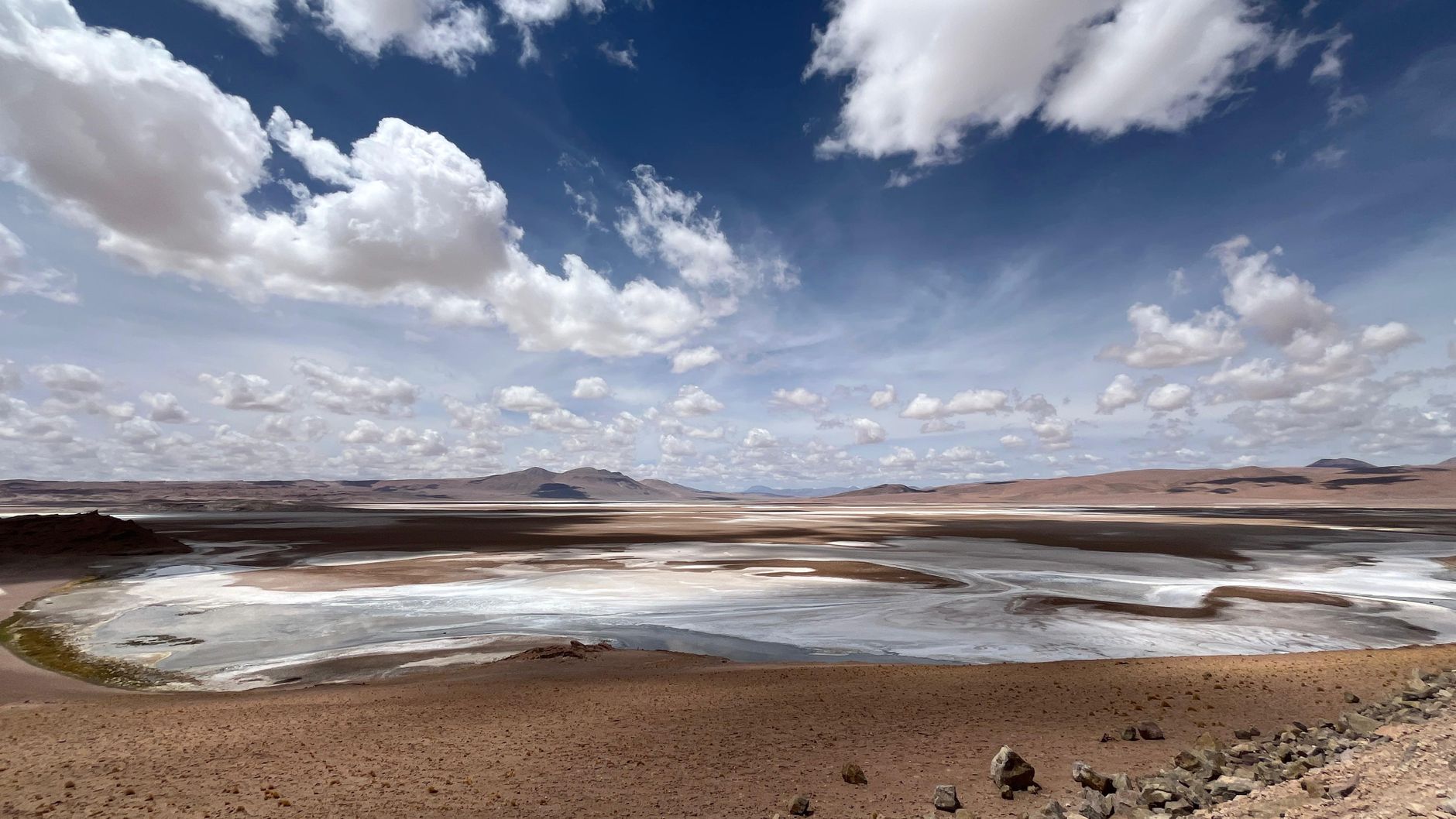
Standing upon the driest plateau on Earth, where stark salt basins and zero light pollution reveal the unfiltered cosmos.
Contents of this Dispatch
At 2,400 meters above sea level, the air in northern Chile contains virtually zero moisture. It catches in your throat like fine dust and strips away all ambient haze until distant volcanoes sixty miles away seem crisp enough to touch. There is an austere purity in this desert that defies standard notions of comfort.
1. The Mineral Silence of San Pedro
San Pedro de Atacama, with its sun-baked adobe houses and dusty dirt lanes, serves as the gateway to this hyper-arid wilderness. Here, shadows are hard and sharp against whitewashed walls, and life moves slowly to preserve hydration. Beyond the oasis, trees vanish entirely, replaced by jagged salt crusts and copper-red sandstones sculpted by relentless wind.
Silence here is not the mere absence of noise; it is a physical weight. With no leaves to rustle and no running water, one hears the gentle crack of salt crystals expanding in afternoon heat and the sound of one's own breathing.
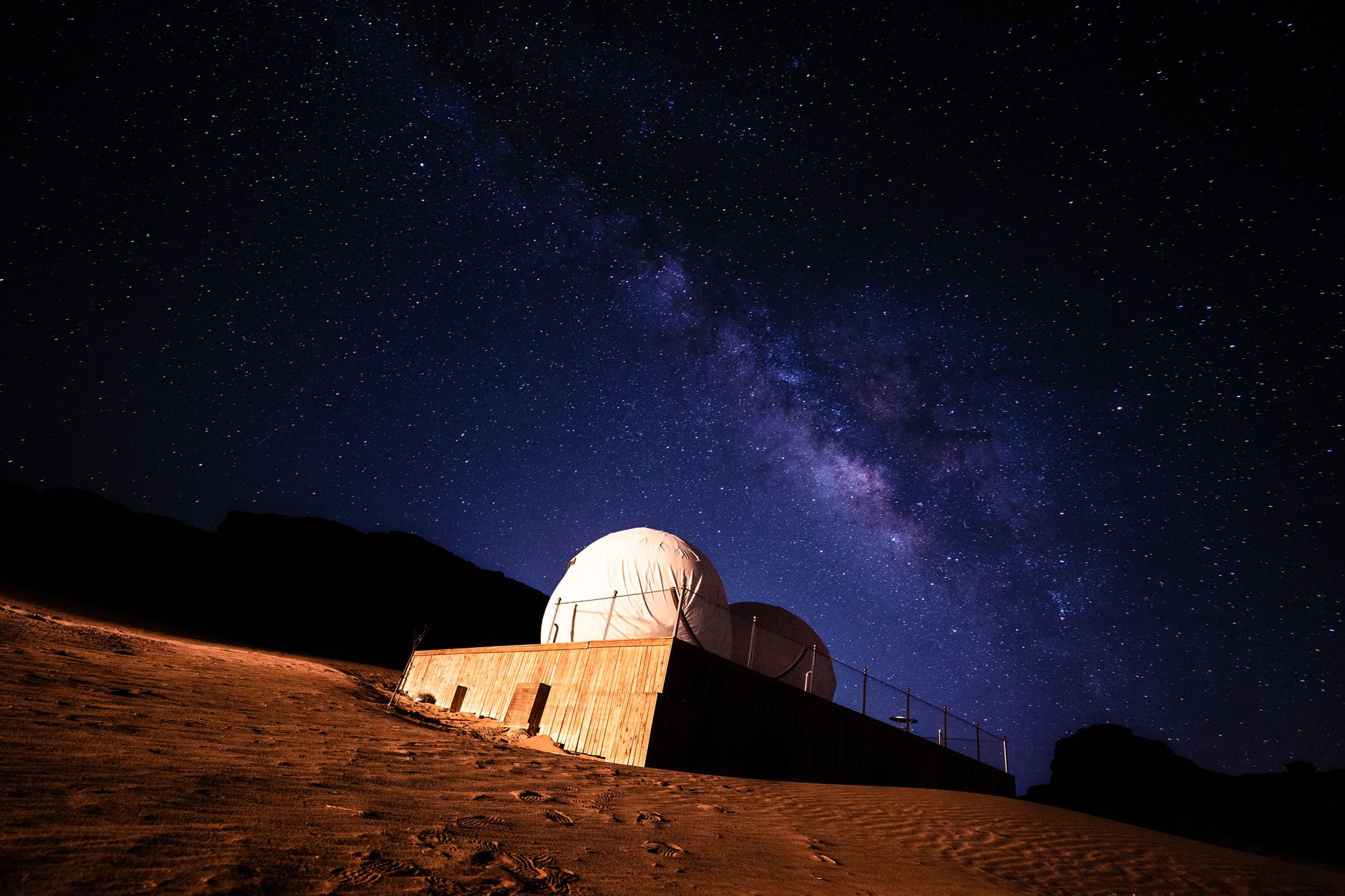
The cosmic dome of the southern sky over the Chajnantor plateau.
2. The Salt Formations of Moon Valley
Walking through Valle de la Luna (Valley of the Moon) feels like stepping onto the surface of an alien world. Layers of ancient lakebeds, forced upward by tectonic collision between the Nazca and South American plates, create towering folded ridges, subterranean salt caverns, and expansive dunes.
As sunset arrives, the valley transforms through shades of ochre, burnt sienna, and violet. The temperature plummets by twenty degrees Celsius in less than an hour as the heat radiates instantly into cloudless space.
3. Astronomy & Galactic Windows
Because the Atacama enjoys more than 300 clear nights each year with negligible atmospheric turbulence, it is home to the world's most advanced astronomical observatories, including ALMA. When darkness falls, the Milky Way casts actual visible shadows across the ground.
Looking upward through clean desert air, the Magellanic Clouds and glowing nebulae appear so vivid that one experiences an overwhelming sense of cosmic perspective. It is an encounter that permanently alters one's perception of terrestrial insignificance.
4. Acclimatization & Preparedness
Exploring high-altitude plateaus requires deliberate preparation: allow two full days in San Pedro before venturing above 4,000 meters to the geysers of El Tatio. Drink four liters of water daily, consume light meals rich in carbohydrates, and invest in heavy windproof thermal layers for nighttime observations.
Drawn to remote frontiers?
Sign up to receive field guides covering southern Chile, Patagonia, and desert highlands.
Request Expedition Advice